The smartest people in the room often struggle the most to act
For most of my career, I believed success came from strategy — from being the person who could think deeply, plan clearly, and anticipate every variable before taking a step. Strategy was my comfort zone. It made me valuable in large organisations because I could connect dots, map out systems, and see around corners.
But when I stepped out to build something of my own — first with Changeable, then with Zero to AI — I hit a wall. Suddenly, there were no teams to delegate to, no implementation units to bring those strategies to life. It was all me. And that’s when I discovered something uncomfortable: my ability to think had far outgrown my ability to act.
I’d become an expert strategist… but a rusty performer.
That imbalance — between thinking and doing — wasn’t a lack of motivation or intelligence. It was a gap in what I now call Execution Intelligence.
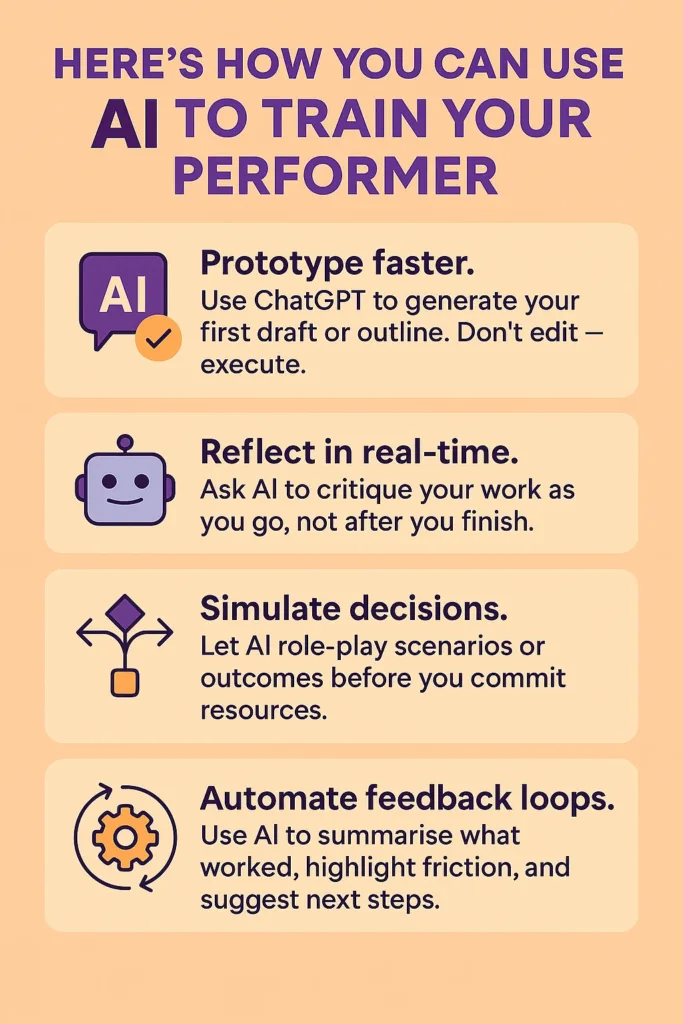
The invisible gap between knowing and doing
Execution Intelligence (ExQ) is the skill that sits quietly between knowing what to do and actually doing it. It’s what transforms plans into movement, and ideas into impact.
For years, we’ve measured intelligence by what we know — our ability to analyse, understand, and reason. But in the AI era, information is no longer scarce. Anyone can access the best knowledge in seconds. The advantage now lies in what you can apply.
ExQ is about bridging that gap — developing the muscle that turns thought into traction.
It’s not about rushing or acting impulsively. It’s about combining strategic clarity with operational courage — the willingness to take imperfect action, learn in motion, and course-correct fast.
When being smart becomes a trap
We don’t talk about this enough: high intelligence can actually make you hesitate. Smart people see too many possibilities. We can forecast failure scenarios before we even start. And so, ironically, the smarter we get, the slower we move.
In my case, that meant endless planning. I built frameworks, roadmaps, and elegant strategies. I created Miro boards and spreadsheets that looked brilliant — but nothing shipped. Every idea felt too important to risk getting wrong.
And that’s the irony: overthinking feels like progress. It keeps us safe, validated, and in control. But in reality, it’s procrastination dressed up as professionalism.
The world doesn’t reward the smartest idea anymore — it rewards the fastest learner. AI has flattened the knowledge hierarchy. Everyone can be informed. The differentiator now is momentum.
Rebuilding my performer
When I realised my strategist had overpowered my performer, I treated it like a rehab program. My goal wasn’t to move fast — it was to move consistently.
I started with 90-minute sprints. Each one had a single outcome: something visible, tangible, and complete. One automation built. One script tested. One blog post shipped. I wasn’t aiming for brilliance — I was aiming for proof.
I began using ChatGPT not as a search engine but as a creative partner. I’d describe what I wanted, ask for the next step, and execute it. When something broke, I’d paste the error in and say, “Let’s fix this together.”
That’s when the magic clicked. I wasn’t learning about AI anymore — I was learning through AI. The process itself became my teacher. Mistakes weren’t failures — they were feedback loops. Each one sharpened my performer, rebuilt my confidence, and reignited my sense of momentum.
Execution Intelligence: a modern skill for a modern world
Execution Intelligence has three components:
1. Intention → Direction.
Define success in one line. Not a page, not a slide deck — one sentence that describes what “done” looks like.
2. Action → Data.
Take one step. Don’t wait for clarity — clarity comes from movement. Each action generates feedback, and feedback is data.
3. Reflection → Improvement.
Pause. Ask: What worked? What didn’t? What did I learn? Adjust, then go again.
This simple loop — intention, action, reflection — is the operating system of Execution Intelligence. The faster you cycle through it, the more capable you become. AI supercharges this loop by removing the friction between intention and action. You can get advice, draft code, refine your writing, simulate a process, or plan your week — all in minutes.
The question is no longer “Can I do this?” but “Will I try?”
The new relationship between strategy and performance
These days, I no longer see strategy and execution as opposites. They’re partners in a rhythm. My strategist creates frameworks, checklists, and automation scaffolds that make performing easier. My performer then takes those and brings them to life — testing, refining, and feeding insights back into strategy.
It’s a continuous loop of thinking, doing, and improving. And every time I repeat it, I feel the fear shrink and the confidence grow.
Execution Intelligence isn’t about speed. It’s about momentum. It’s about re-learning how to trust motion.
Why AI is your ultimate performance partner
AI doesn’t remove the need for human effort — it amplifies it. It’s the training partner that never sleeps, never judges, and never gets bored of repetition.
When I build with AI, I’m not outsourcing my brain. I’m extending it. I’m teaching it how I think, and it’s teaching me how to act faster.
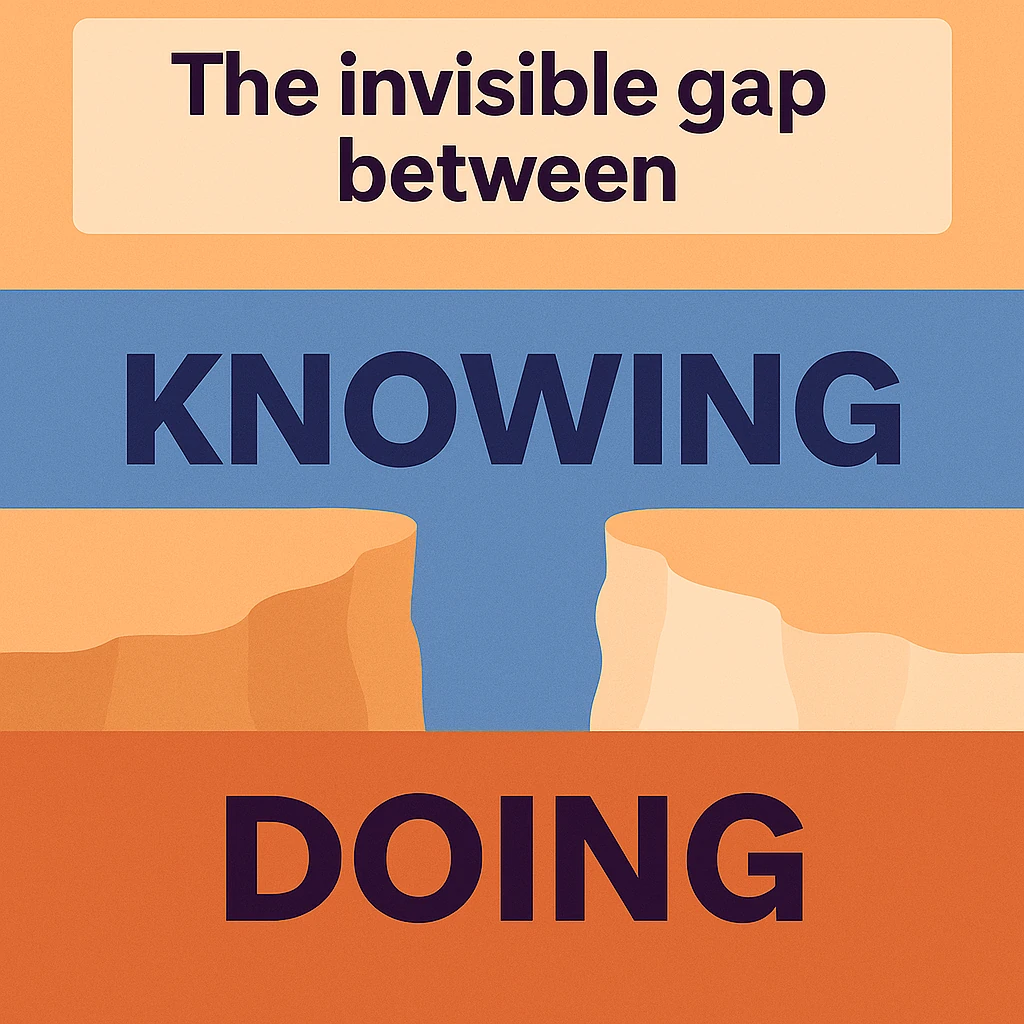
Here’s how you can use AI to train your performer:
- Prototype faster. Use ChatGPT to generate your first draft or outline. Don’t edit — execute.
- Reflect in real-time. Ask AI to critique your work as you go, not after you finish.
- Simulate decisions. Let AI role-play scenarios or outcomes before you commit resources.
- Automate feedback loops. Use AI to summarise what worked, highlight friction, and suggest next steps.
Every loop you complete increases your Execution Intelligence. And that, more than knowledge, is what future-proofs your career.
Example: Building Zero to AI in motion
When I started Zero to AI, I didn’t have a plan. I had an intention — to share my honest journey of learning and reinvention. I gave myself two weeks and a single rule: something must ship every day.
The first day, I wrote a short post explaining what Zero to AI meant. The second, I designed a quick logo using the Changeable palette. The third, I recorded a raw voice memo that became the first episode. By day fourteen, I had a brand, a rhythm, and momentum.
I didn’t learn my way into it — I built my way into it.
That’s what Execution Intelligence looks like in real life. It’s not clean, linear, or predictable. It’s messy. But it’s real. And that realness is what separates movement from intention.
The challenge for mid-career professionals
If you’ve built your career on being strategic, cautious, and reliable — you already have an incredible foundation. The next step is not to think less, but to act more. To reawaken your performer.
Execution Intelligence is your edge. It turns knowledge into momentum, confidence into action, and hesitation into learning. And in a world that rewards speed and adaptability, that’s the most valuable currency you can have.
So here’s your challenge:
Pick one small task that matters to your week. Give yourself 90 minutes. Use AI as your co-pilot. Build, reflect, ship.
You’ll be amazed how quickly progress compounds when you replace planning with motion.
The takeaway: Thinking gets you started — doing gets you there
In the AI era, knowledge is abundant, but action is scarce. The people who will thrive are those who can think clearly and move quickly.
Execution Intelligence isn’t just a productivity framework. It’s a mindset — a way of working that values outcomes over perfection, progress over control, and action over fear.
Your next reinvention won’t come from learning another tool. It’ll come from using one — imperfectly, consistently, and bravely.
Because in this new world, intelligence gets you started.
Execution gets you there.