Zero to AI — Episode: The Pivot
Hello, it’s Steve. Welcome to Zero to AI — the honest, sometimes messy, always real journey of learning and building with artificial intelligence. Today’s episode is about the pivot. Not just changing jobs, but reshaping a life. If you’re mid-career, juggling family, and wondering if you can actually do this… this one’s for you. This is the story of how one small question — and a few brave experiments — can completely change the way you see your work, your time, and your future.
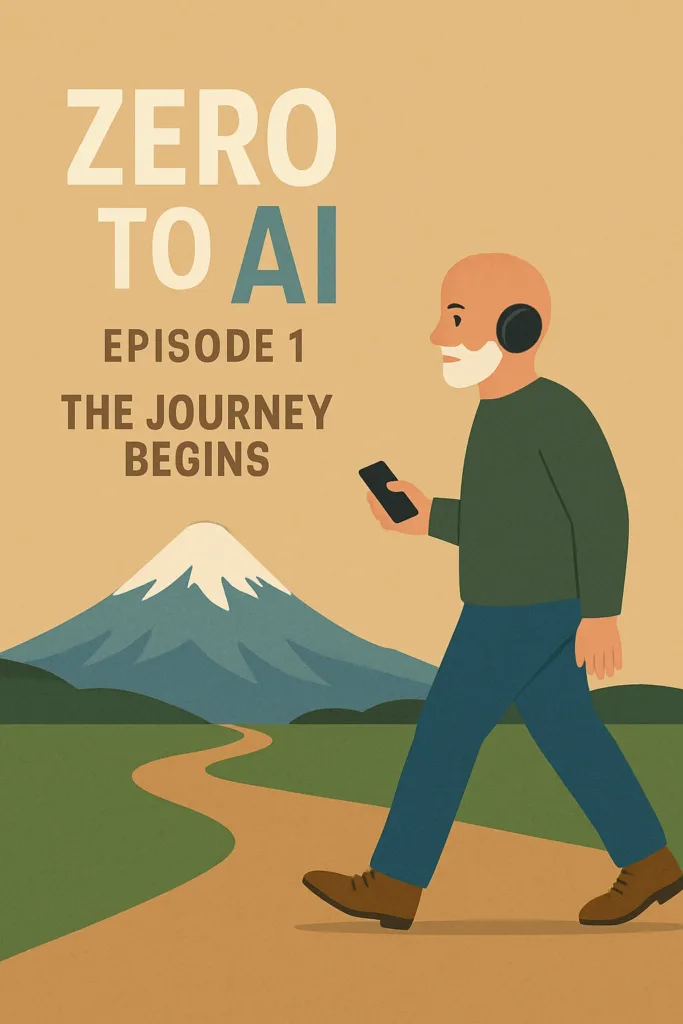
So let’s begin with the why — why I started Zero to AI and this podcast.
I ran a digital agency for seventeen years. Sold it in twenty seventeen. Since then, I’ve been a senior lecturer, a business adviser, and most recently a consultant on big projects for government agencies and multinational companies. On paper, that looks stable. But beneath the surface, something was shifting. The economy turned. Work slowed. The projects I loved became harder to sustain. At the same time, life at home was speeding up — my kids, my partner, our routines, and our plans for the kind of life we wanted to build together here in Aotearoa.
And that’s when the questions started. What would it look like to build a life that truly integrates my work, family, and purpose? Could I design a career around curiosity and creativity — instead of pressure and predictability? And most of all, could I combine everything I already know — strategy, problem-solving, communication — with this new world of AI, to make my work faster, clearer, and more valuable?
That’s the pivot. It’s not a full reinvention. It’s a re-combination — bringing everything you’ve learned into a new form that fits who you are now.
So why this episode, and why now?
Because the pivot isn’t theoretical. It’s real. It’s scary. It’s exciting. It’s necessary. I want to share the process as it unfolds — not just the highlight reel, but the in-between moments: the doubts, the experiments, the wins that happen in the quiet corners of everyday work.
By the end of this episode, you’ll have a clear plan you can try this week — three small experiments, one mindset shift, and one next step that will bring you closer to your own version of the pivot. Together, we’ll build confidence through motion.
But first, let’s look at where this journey is heading — because Zero to AI isn’t just a podcast you listen to; it’s a learning companion. Let’s take some time to look at the Zero to AI journey.
Zero to AI isn’t just a podcast. It’s a guided learning journey — an evolving, year-long experience made up of connected twelve-week phases of exploration, practice, and transformation. It’s built for people like you: mid-career professionals, consultants, educators, and creatives who want to understand and apply AI — not as theory, but as a practical toolkit that reshapes how you work and live.
Each twelve-week phase builds on what came before, adapting as we learn together. The journey is reflective and responsive — I’ll release the next twelve-week schedule near the completion of the first, allowing the learning itself to guide the direction we take next.
Each phase focuses on something tangible — a mindset shift, a tool, a workflow, or a project you can complete. You’ll learn by doing, testing, refining, and reflecting. By the end of each twelve-week block, you’ll have both new skills and real systems running in your work or business.
We begin with Phase One — your starting point.
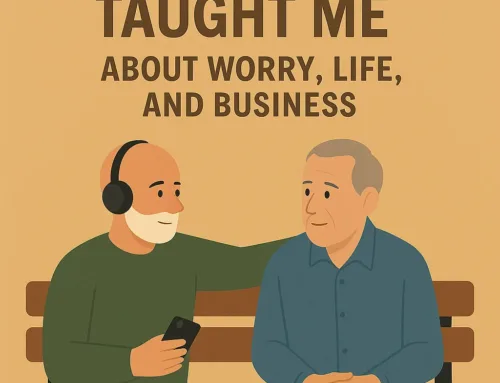
Week One, starting October Seventh, is all about Why I Started Zero to AI. We’ll explore motivation and alignment. You’ll map your personal “why,” reflect on what’s changing in your industry, and start identifying where AI could make the biggest difference in your day-to-day life.
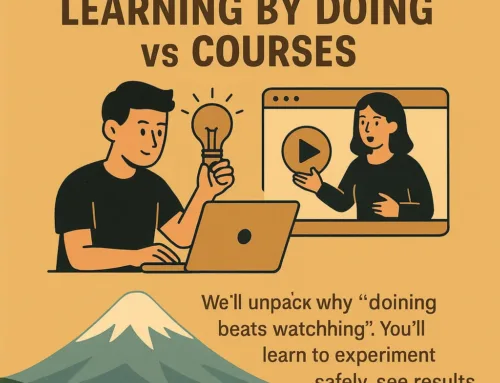
Week Two, from October Fourteenth, focuses on Learning by Doing versus Courses. We’ll unpack why “doing beats watching.” You’ll learn how to experiment safely, get results fast, and avoid the trap of endless tutorials. Real learning happens in motion.
Then comes Phase Two — delivering your first practical wins.
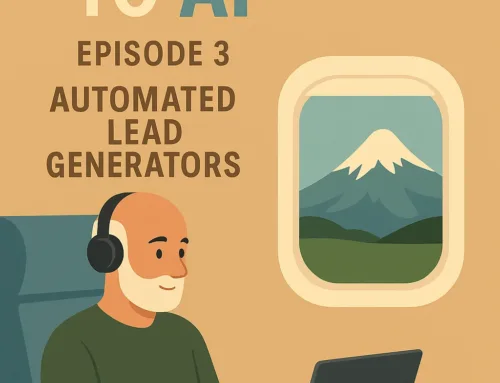
Week Three, from October Twenty-First, is Automated Lead Generators. You’ll build your first AI-enabled workflow — Forms to Sheets to Scoring to Auto-email. You’ll see how a few hours of setup can unlock a system that works while you sleep.
Week Four, from October Twenty-Eighth, explores Why You Don’t Need to Code. We’ll dive into no-code tools that make automation accessible to everyone. You’ll see how logic and creativity — not syntax — are what truly matter.
Week Five, from November Fourth, is Prompt Generator: Your First System. You’ll create a reusable prompt generator using Sheets and ChatGPT, giving you consistent, high-quality AI outputs tailored to your tone and goals.
Next, we step into Phase Three — scaling your tools and confidence.
Week Six, starting November Eleventh, focuses on Building Resilience Through AI. You’ll learn how to stabilise income, reduce overwhelm, and design systems that give you breathing room.
Week Seven, from November Eighteenth, is The Human Side of AI Workflows. We’ll discuss ethics, empathy, and creative control — how to keep your work personal even when assisted by machines.
Week Eight, from November Twenty-Fifth, is Zero to AI Toolkit. You’ll collect and adapt templates, prompts, and frameworks that accelerate your learning curve.
Then we enter Phase Four — applied business AI.
Week Nine, starting December Second, is AI-Powered Dashboards. You’ll connect data, visualise it, and let AI surface insights automatically.
Week Ten, from December Ninth, is Creating Your Own AI Assistant. You’ll design and test an assistant that can handle routine tasks — freeing you to focus on strategy and creativity.
And finally, Phase Five — looking forward.
Week Eleven, beginning December Sixteenth, is Designing AI Personas and Panels. You’ll simulate an expert team using multiple AI personas that collaborate to produce better ideas and results.
Week Twelve, starting January Sixth, is Reflections and Ninety-Day Plan. You’ll review progress, capture insights, and design your next twelve-week block of learning — keeping momentum alive.
This twelve-week plan is just the first part of a full one-year journey. Zero to AI is built to evolve — reflective, responsive, and naturally adaptive. I won’t plan the whole year upfront, because learning itself will shape what comes next. Each twelve-week block grows from what we’ve built, ensuring relevance and focus. When the first phase wraps up, I’ll release the next — informed by what we’ve learned together.
Whether you join in real time or catch up later, you’ll finish each phase with tangible results — systems you’ve built, clarity about your direction, and the confidence to keep going.
The moment I knew I had to change.
It happened on an ordinary Tuesday. I was looking at my calendar, and it was emptier than I liked. I had proposals out, but nothing confirmed. I’d been busy, but not fulfilled. And in that quiet space, I realised I’d been waiting for the market to decide my value — instead of creating it myself.
So I opened a blank page and wrote a single line: “What could I deliver in forty-eight hours that would be valuable enough to pay for itself?” That single question changed everything. It forced me to simplify, to focus on outcomes, and to find ways that AI could help me deliver faster, smarter, and with more precision.
That question became a compass — not a plan, but a direction.
Facing the fears, and how I dealt with them.
Fear one: “I’m late to the AI party.” Truth? You’re not late. You’re right on time — the moment you start. The advantage isn’t in being an early adopter; it’s in being a skilled translator — someone who can connect business problems to small, working systems.
Fear two: “I don’t have time to learn.” The reality is, you don’t need massive blocks of time. You need focused bursts. One hour, three times a week. Protect them like meetings with your future self.
Fear three: “What if it doesn’t work?” It will, just not in the way you expect. Each failed experiment teaches you constraints — what data matters, what tools fit, what steps you can automate next. Every constraint reveals the path forward.
The first easy wins.
I started small. A form feeding into a spreadsheet. A script scoring responses. An auto email reply that booked calls without me. Within a day, I had leads flowing again — simple, functional, effective.
Then came the prompt generator. One spreadsheet. Columns for audience, tone, and goals. One formula that created structured, powerful prompts. Suddenly, I was producing better outputs in half the time.
Each system added confidence. Each confidence created curiosity. And that curiosity drove more building. That’s the cycle that builds momentum.
How I now approach building systems.
The framework I use today is simple and repeatable:
Observe — find the friction. Shrink — reduce scope. Sketch — map in five boxes. Ship — build version zero. Score — measure value.
It’s not about tech. It’s about rhythm. Small cycles. Constant progress. No overwhelm.
Mini-experiments you can try this week.
The One-Question Form — capture needs fast. The Prompt-to-Brief — structure creativity. The Inbox Digest — reclaim your focus.
Each takes an hour. Each creates a visible change. Do one. See what happens.
A mindset shift that changes everything.
The pivot taught me that ambition isn’t about size; it’s about alignment. It’s about designing a practice that fits your life. Family first isn’t a limitation — it’s a design principle. It keeps you honest and focused on what truly matters.
What I’m building next.
Two brands, two energies: Changeable — the consultancy where outcomes ship. Zero to AI — the journey where truth is shared. Both exist to serve the same mission: helping people build smarter, calmer, more human systems powered by AI.
A simple thirty-day plan you can try.
Week One — clarify motivation. Week Two — build something small. Week Three — share it. Week Four — review and refocus.
Repeat. That’s how momentum compounds.
How you’ll know you’re on track.
You’ll feel it. Progress replaces anxiety. Curiosity replaces overwhelm. You’ll see systems running, time freeing, and confidence growing. That’s the pivot. That’s the start of your Zero to AI journey.
Wrapping up today’s episode.
If this resonated, take one small action: book a “Confidence Hour.” Build, test, reflect. Tell someone you’re doing it — or tell me. Hi there, I’m cheering you on.
Next time on Zero to AI focuses on Learning by Doing versus Courses. We’ll unpack why “doing beats watching” — how to learn faster by building small, useful experiments directly in ChatGPT and seeing real results. It’s all about shifting from passive learning to active creation, one experiment at a time. Thanks for listening. If you want the practical side — offers, pilots, measurable outcomes — that’s Changeable. If you want the behind-the-scenes truth about building a life and work you actually want — that’s Zero to AI. I’m Steve. Talk soon.